
MEP in Construction: Complete Guide to Systems, Coordination, BIM & Future Trends
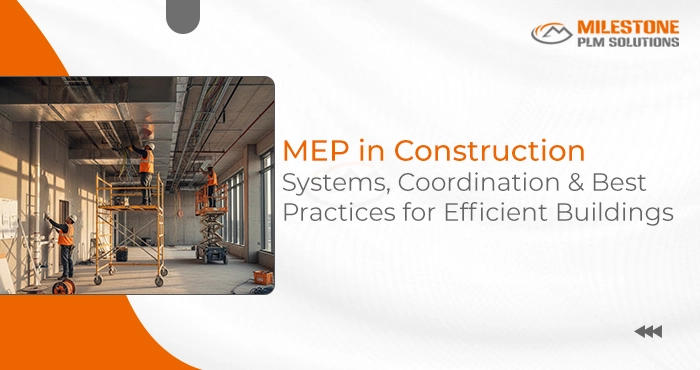
MEP in construction are a basic element of the construction industry, as they form the backbone of a modern building. Although architectural design defines the aesthetic properties of a building, MEP systems define the functionality, functionality, and longevity of the building.
Starting from the HVAC comfort and power supply to the water supply and fire safety systems, MEP systems have a direct impact on the cost, schedule, and safety of construction projects. Poorly coordinated MEP systems may lead to clashes, delays, and rework, while properly coordinated MEP systems ensure smooth construction operations.
In this complete guide to MEP in construction, we’ll cover:
- What MEP means in construction
- Key systems and components
- Construction-stage challenges and solutions
- Role of BIM and modular MEP
- Best practices followed by industry experts
- Future trends shaping MEP construction
Frequently asked questions
What Is MEP in Construction?
MEP in construction industry involves the coordination of three basic systems that work together to make a building safe and efficient for use.
Key MEP Systems in Construction
Mechanical Systems (M)
- HVAC systems (Heating, Ventilation, and Air Conditioning)
- Chillers, boilers, air handling units, ductwork, and piping
- Regulates indoor temperature, air quality, and humidity
Electrical Systems (E)
- Power distribution and backup power availability
- Lighting, automation, and communication systems
- Fire alarm, security, and low-voltage systems
Plumbing Systems (P)
- Water supply and drainage systems
- Fire protection and sprinkler systems
- Waste management and water conservation solutions
These systems work together to ensure that buildings are comfortable, safe, energy-efficient, and functional.
Importance of MEP in Construction Projects
A construction project depends on the quality of MEP planning and execution. The importance of MEP in a construction project can be explained as follows:
- Functional Comfort: Functional HVAC, lighting, and plumbing for the occupants
- Safety & Compliance: Fire protection, emergency power, and electrical safety
- Energy Efficiency: Efficient systems to reduce energy consumption and costs
- Sustainability: Aligns with green building certifications such as LEED and BREEAM
- Cost Control: Reduces rework, maintenance, and operational costs
In the end, a building without a strong MEP system will be inefficient, no matter how good it is in other ways.
Common Challenges of MEP in Construction and Their Solutions
1. Space Constraints & Design Conflicts
MEP (mechanical, electrical, and plumbing) system designs are often faced with restrictions in ceiling and shaft space allocations.
Solution:
- BIM coordination
- Clash detection
- Early-stage planning
2. Energy Efficiency & Sustainability Demands
Increasing energy prices and sustainability demands add complexity to MEP system design and functionality.
Solution:
- High-efficiency HVAC systems
- LED lighting and smart controls
- Renewable energy integration
3. Budget & Timeline Overruns
Uncoordinated MEP in construction can lead to project delays.
Solution:
- Modular and prefabricated MEP systems
- Accurate shop drawings
- Correct installation sequencing
4. Multi-Discipline Coordination
MEP system designs must integrate with architectural and structural designs.
Solution:
- Collaborative planning
- BIM-based coordination meetings
- Centralized model management
MEP in Construction Phase Execution
In the construction process, the execution of mechanical, electrical, and plumbing (MEP) work needs to be properly coordinated with civil and structural works. This includes:
- Installation coordination with slabs, beams, and walls
- Coordination of sleeves, openings, and embeds
- Use of coordinated shop drawings and BIM models
- Clash resolution and inspections on site
Proper execution of MEP work helps in smooth and efficient project completion.
Innovations in MEP Construction
Revit is the leading BIM software for architectural design and documentation in the USA and worldwide. It allows real-time collaboration, clash detection, and cloud-based solutions with BIM 360.
1. BIM for MEP Coordination
- 3D visualization and design validation
- Clash detection before site execution
- Real-time collaboration among project stakeholders
2. Modular & Prefabricated MEP Systems
- Off-site assembly for faster installation
- Improved quality and reduced labor costs
- Minimal disruption at the construction site
3. Smart & Automated Building Systems
- IoT-enabled heating, ventilation, and air conditioning (HVAC) systems and lighting
- AI-based energy optimization
- Predictive maintenance and monitoring
Best Practices for MEP in Construction
- Early MEP Planning: Planning should begin in the conceptual design stage.
- BIM Integration: Employ coordinated 3D models
- Prefabrication: Minimize on-site labor and time
- Energy Optimization: Focus on energy efficiency and sustainable design.
- Cross-Team Collaboration: Collaboration between architects, engineers, and contractors should be collaborative.
- Performance Monitoring: Employ automation and sensors after project completion
Partner with Expert MEP Engineers for Your Construction Project
Planning to execute a construction project with optimized, clash-free, and future-proof MEP systems?
Our team of skilled MEP engineers is dedicated to MEP in construction in the building industry for residential, commercial, and industrial applications. Starting from BIM coordination and modular construction to energy-efficient MEP system design, we assist in minimizing expenses, avoiding delays, and ensuring hassle-free site execution.
📞 Get in touch with us today to plan smarter, safer, and more efficient buildings.
Future Trends in MEP Construction
- Smart and AI-based buildings
- Net-zero and sustainable construction
- Renewable energy integration
- Modular and prefabricated MEP systems
- Advanced HVAC, electrical, and plumbing materials
Future-proof MEP in construction provide long-term functionality, efficiency, and sustainability.
Frequently Asked Questions
Q1. What is the role of MEP in construction?
MEP systems are responsible for providing necessary services like HVAC, power, water supply, and fire safety to buildings.
Q2. Why is MEP coordination important in construction?
It avoids clashes, minimizes rework, manages costs, and facilitates smooth execution.
Q3. How does BIM help MEP construction projects?
MEP design deals with planning and calculations, whereas MEP construction deals with execution, installation, and site coordination.
Q4. What is the difference between MEP design and MEP construction?
MEP design deals with planning and calculations, whereas MEP construction deals with execution, installation, and site coordination.
Q5. What are the benefits of modular MEP systems?
They offer faster installation, better quality, lower labor costs, and less disruption to site activities.
Q6. How does MEP in construction support sustainability?
It promotes sustainability by optimizing energy and water consumption, minimizing emissions, and facilitating green building certifications such as LEED and BREEAM.