
BIM for Architects: Improve Design, Collaboration & Project Efficiency
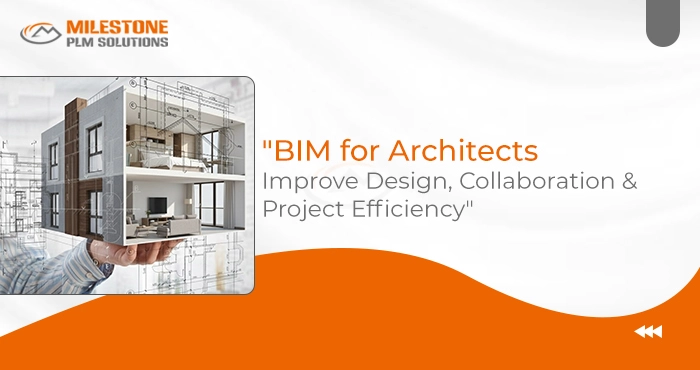
Building Information Modeling (BIM) has become a necessity for architecture firms in today’s modern world. BIM is a smart 3D design and data management process that enables architects to plan, design, coordinate, and deliver buildings more accurately and effectively. Rather than using separate 2D drawings, BIM is a single source of truth where architects, engineers, and contractors work together in real-time.
In the USA, UK, and India, there is a growing need for BIM-enabled project delivery. Starting with the implementation of BIM requirements in the UK, commercial projects in the USA, and the rapidly developing construction industry in India, BIM for architects has emerged as a competitive tool.
What is BIM and Why It Matters to Architecture?
Building Information Modeling (BIM) is a process, not a product. It is based on an intelligent 3D model that is accompanied by a centralized database that holds all the information related to the project, including geometry, materials, quantities, schedules, costs, and lifecycle information.
With the use of BIM tools such as Autodesk Revit or Graphisoft ArchiCAD, architects can make changes to their designs, and all related drawings, sections, and schedules will be automatically updated. This will eliminate inconsistencies and ensure that the design intent is maintained.
Architecture projects in the USA, UK, and India involve various consultants, contractors, and government regulations. Historically, the lack of integrated data exchange resulted in costly mistakes. As per the U.S. National Institute of Standards and Technology, inefficiencies due to poor interoperability cost building owners $15.8 billion every year. BIM solves this problem by allowing smooth data exchange between architecture, engineering, and construction disciplines.
Top Benefits of BIM for Architects
By implementing BIM, architects can harness the benefits that enhance design quality and project delivery worldwide.
1. Better Visualization and Design Accuracy
BIM allows architects to develop a realistic 3D model of the building that accurately reflects the final structure. Virtual walk-throughs assist clients in the USA, UK, and India to visualize spaces early on and make informed decisions before the construction process begins.
2. Enhanced Collaboration and Coordination
Using BIM, all disciplines collaborate on a single model. Architectural, structural, and MEP models are fully integrated, ensuring that all teams, whether local or offshore, have access to the latest information. Clash detection automatically identifies conflicts before they become costly site problems.
3. Clash Detection and Risk Reduction
BIM software automatically detects clashes between building components. Addressing these problems in the design stage reduces construction delays, change orders, and project risks, particularly for large projects in the USA and UK.
4. Cost and Time Efficiency
BIM enhances planning and resource management through the model as a data-rich inventory. Research indicates that BIM can achieve a planning time reduction of up to 20% and costs of materials by 15%, making it a very valuable tool for cost-conscious projects in India and time-conscious projects in the West.
5. Automatic Documentation
Changes to the design automatically generate changes to all drawings, schedules, and quantities. This eliminates RFIs, avoids documentation errors, and ensures compliance with regulations in different regions.
6. Sustainability and Lifecycle Management
BIM enhances sustainable design through energy analysis, material optimization, and performance simulation. This is in line with sustainability regulations in the UK, green building regulations in the USA, and asset management in India.
Best BIM Tools for Architects
Choosing the right BIM software is critical to the success of BIM implementation in various projects and regions.
Autodesk Revit
Revit is the leading BIM software for architectural design and documentation in the USA and worldwide. It allows real-time collaboration, clash detection, and cloud-based solutions with BIM 360.
Graphisoft ArchiCAD
ArchiCAD is a design-oriented BIM software that is popular in the UK and Europe. It is recognized for its user-friendly interface and excellent OpenBIM functionality, which is suitable for collaborative and regulatory projects.
Trimble SketchUp
SketchUp is not a full BIM software but is widely used worldwide for conceptual design and massing analysis. Many architecture firms use it in the early stages of design before moving to full BIM development.
Vectorworks Architect
Vectorworks is a BIM software that combines BIM functionality with CAD flexibility and is preferred by design-oriented architecture firms that require robust graphical display and macOS support.
Pro Tip: Most architecture firms adopt a hybrid approach to BIM implementation, with SketchUp for conceptual design, Revit or ArchiCAD for full BIM development, and Navisworks or BIM 360 for coordination and review.
Challenges in Adopting BIM for Architecture Firms
However, there are some challenges faced by BIM implementation despite its benefits.
- Complex Workflows and Interoperability – Integration of various software platforms and ensuring compatibility is a challenge that requires standardized workflows, especially when working on international projects.
- Resistance to Change – 2D CAD users may find it difficult to adapt to BIM. This is a challenge across different markets and underlines the importance of organized training.
- High Initial Investment – Implementation of BIM software, hardware, and training requires a high initial investment. Small companies, especially in emerging markets, need to carefully consider the ROI.
- Learning Curve – There may be a loss of productivity as teams learn to work with BIM software and processes.
How to Overcome These Challenges: Some companies have found it useful to start with pilot projects or systematic BIM training or to work with experienced BIM service providers.
Real-World Applications and Success Stories
Shanghai Tower, China
The world’s tallest skyscraper was made possible by the use of BIM, which coordinated the work of more than 1,000 contractors. The Autodesk Revit and Navisworks software enabled the creation of a coordinated model, which ensured correct sequencing and minimized errors and delays.
Good Samaritan Hospital Expansion, USA
The nine-story hospital expansion project applied BIM to create a coordinated design and build model. The software automatically updated all related drawings in case of any design changes, ensuring smooth coordination and minimal delays.
The above cases illustrate how BIM enables complex architectural projects around the world.
BIM vs Traditional CAD for Architects
The traditional CAD system is a 2D drawing system that requires the architect to make changes to the plans, sections, and elevations manually for every change in design. BIM, on the other hand, is an intelligent 3D model-based system where every view and piece of information is automatically updated. This eliminates inaccuracies, improves coordination, and allows architects to make design decisions faster and more effectively. BIM allows architects to estimate costs, perform clash detection, and analyze the lifecycle of a project, which is not possible with CAD.
How Architects Can Get Started with BIM
- Choose the Right Software: Begin with established BIM software like Revit or ArchiCAD.
- Invest in Training: Upskill teams through workshops, certifications, and mentoring.
- Start Small: Implement BIM on a pilot project before scaling.
- Collaborate Early: Engage structural and MEP partners from the initial design stage.
- Set BIM Standards: Define naming conventions, file structures, and LOD guidelines.
- Consider Outsourcing: Partner with BIM specialists to support projects across the USA, UK, and India.
Why Work with Milestone PLM Solutions
Milestone PLM Solutions has over 21 years of experience in the industry and is a reliable BIM and engineering services provider for architecture practices globally.
Our BIM Expertise
- Architectural BIM modeling
- Clash detection and coordination
- 4D construction simulation
- 5D cost estimation
- Accurate, design-aligned BIM deliverables
Client Benefits
Our clients see fewer change orders, better schedules, enhanced quality, and accelerated project delivery. By seamlessly integrating with your workflow, we allow architects in the USA, UK, and India to concentrate on design innovation while we handle the technical complexity of BIM.
Trusted Global Partner
Milestone has partnered with 100+ organizations on residential, commercial, and institutional projects in the USA, UK, and India, providing trusted and high-quality BIM solutions that meet global standards.
Conclusion
BIM is revolutionizing the architecture industry by allowing for accurate designs, smooth collaboration, and effective project execution worldwide. Although the implementation of BIM involves planning and costs, the future benefits clearly outweigh the difficulties.
If you are ready to unlock the full potential of BIM for architects, partner with Milestone PLM Solutions. We help architecture firms in the USA, UK, and India deliver smarter, more sustainable buildings with confidence.
Frequently Asked Question
What is BIM and why is it important for architects?
Building Information Modeling (BIM) is a digital process that assists architects in designing, visualizing, and managing buildings in a more efficient manner. BIM enhances design accuracy, coordination, clash detection, and collaboration in projects, thus minimizing errors and construction costs while maximizing project quality.
Which BIM software is best for architects?
The most popular BIM software used by architects includes Autodesk Revit, Navisworks, Archicad, and Bentley OpenBuildings. Autodesk Revit is still the most widely used BIM software in the USA, UK, and India because of its robust modeling, documentation, and coordination tools.
Can small architecture firms use BIM?
Yes, BIM is extremely useful for small and mid-sized architecture firms. Scalable workflows and BIM outsourcing services enable small architecture firms to produce high-quality designs, increase efficiency, and compete with large architecture firms without adding to overhead costs.
Is BIM outsourcing cost-effective for architects?
BIM outsourcing is a cost-effective option for architects as it helps minimize the cost of in-house employees, accelerates the completion of projects, and allows architects to hire experienced BIM experts.
Does Milestone PLM provide BIM services in the USA and UK?
Yes, Milestone PLM offers end-to-end BIM services to clients in the USA, UK, and India. There services include BIM modeling, coordination, shop drawings, and as-built documentation, which are delivered with global standards, time zone compatibility, and industry best practices.