
Step-by-Step Workflow for Structural Design of Buildings Projects
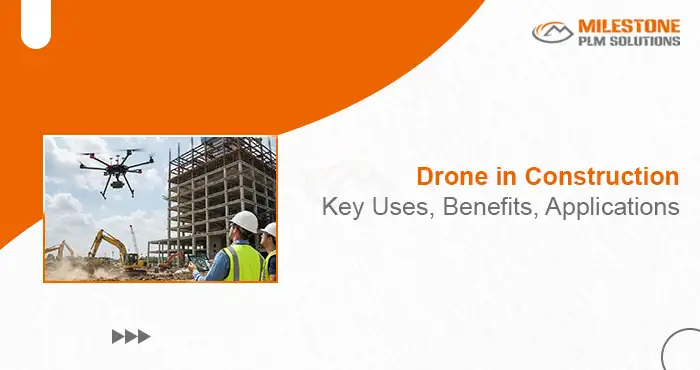
A rapidly changing world is emerging in the construction sector as a result of innovative technologies developed to increase efficiency, safety and reliability. Among these, the use of drones in construction has revolutionized the field and changed conventional building techniques. Drones were earlier used primarily for aerial photography, but they have also become important tools for site surveying, inspection, project monitoring, and Scan to BIM integration in addition to providing an aerial perspective.
As construction projects become increasingly complicated and project deadlines continue to decrease, construction companies are beginning to utilize drones to obtain immediate and accurate data, improve decision-making, and minimize risk. This article will examine how drone technology is used in the construction industry today, as well as construction applications in future projects. Knowing these developments will allow industry stakeholders to understand the transformational possibilities offered by drone technology.
What Are Drones in Construction?
Drones, also known as UAVs (Unmanned Aerial Vehicles), can be operated either remotely or independently, and are therefore categorized as autonomous flying machines. Drones use sophisticated sensors, cameras, GPS systems, LiDAR scanning, and thermographic imaging to produce precise aerial images and record them in real-time.
In many instances, construction professionals utilize drones for efficient data collection, thereby eliminating the need for extensive manual processing of high-resolution, time-consuming and potentially dangerous data. The data collected via drone technology can also be compiled into 2D maps, 3D models, point cloud databases, and orthomosiac images, which can be further incorporated into BIM, GIS, and project management platforms.
With this capability to deliver accurate visual and spatial data, construction professionals can utilize this data to more effectively plan, coordinate and execute each phase of their projects.
Key Uses of Drones in Construction
1. Site Surveying and Mapping
Drones allow for simplified and accelerated collection of high-resolution aerial data using various methods, including photogrammetry and LiDAR, resulting in rapid generation of topographic maps, contoured surfaces, terrain models (or Zoser), and precise construction plans.
In addition, the availability of precise survey data early in a project enables developers to make more informed decisions and to reduce the frequency of costly design changes, errors, and delays.
2. Construction Progress Monitoring
Monitoring projects frequently with drones is quite common. Drones capture the state of your construction site frequently, giving project managers a way to compare what was planned against current statuses.
When used in conjunction with visual reports, they improve transparency, increase the chances that remote stakeholders will be able to see and identify delays in a timely manner, and ultimately help keep the project on track.
3. Safety Inspections and Risk Assessment
Construction sites are inherently hazardous. Safety inspections often require workers to access high or confined areas, such as scaffolding, rooftops, and tall structures.
Drones eliminate these risks by performing inspections remotely. High-resolution images and videos detect unsafe practices, structural defects, and potential hazards, helping teams improve safety compliance and reduce accidents.
4. Quality Control and Defect Identification
Drones equipped with thermal and high-definition cameras detect cracks, water leaks, insulation gaps, and other defects early. Early detection ensures quality control, prevents costly rework, and enhances construction standards.
Thermal drones are particularly useful for detecting heat loss, moisture intrusion, and electrical issues in buildings.
5. Resource, Equipment, and Workforce Monitoring
Large construction sites pose challenges in managing materials, equipment, and workforce. Drones provide aerial visibility of storage areas, equipment movements, and workforce distribution, optimizing logistics, preventing theft, and reducing material wastage.
Benefits of Using Drones in Construction
- Time Savings – Drone-based surveys and inspections are much faster than manual methods. Tasks that took days or weeks can now be completed in a few hours, accelerating project timelines.
- Cost Reduction – Drones help cut labor costs, reduce rework, and minimize errors. Early detection of design flaws and risks prevents expensive corrections in later stages, saving companies money across the project lifecycle.
- High Accuracy and Reliable Data – With GPS, LiDAR, and photogrammetry capabilities, drones deliver precise, consistent data. Accurate measurements enable better estimation, planning, and decision-making.
- Improved Safety – Drones reduce the need for workers to access dangerous areas, lowering accident rates and improving site safety records.
- Enhanced Communication and Collaboration – Visual data such as aerial images, videos, and 3D models improve collaboration among engineers, contractors, clients, and project managers. Everyone gains a clear understanding of site conditions and progress.
Major Applications of Drones in Construction
- Pre-Construction Planning and Feasibility Studies – Before construction starts, drones assess terrain, identify obstacles, and analyze land conditions. This pre-construction data supports better site selection, layout planning, and risk assessment.
- Earthwork Analysis and Volume Measurement – Drones calculate cut-and-fill volumes, excavation quantities, and stockpile measurements accurately. This supports cost estimation, billing, and material planning.
- Infrastructure and Large-Scale Projects – For roads, bridges, railways, airports, and industrial plants, drones provide efficient monitoring over expansive areas. Aerial inspections detect issues that may not be visible from the ground.
- Scan to BIM Integration – One of the most advanced uses of drones in construction is Scan to BIM workflows. Drone-captured point clouds are converted into accurate BIM models, representing the real-world site conditions. This is especially useful for renovation, retrofit, and facility management projects where as-built documentation is critical.
- Post-Construction Documentation and Facility Management – After project completion, drones capture as-built documentation for maintenance, audits, asset management, and marketing purposes. These records help facility managers maintain buildings efficiently throughout their lifecycle.
Role of Drones in Sustainable Construction
Sustainability is a growing priority, and drones play a key role in environmentally responsible construction practices:
- Reduced Material Waste: Accurate quantity take-offs prevent over-ordering of materials.
- Minimized Excavation and Rework: Efficient monitoring reduces unnecessary work.
- Energy Efficiency: Thermal drones identify heat loss and insulation gaps.
- Lower Carbon Footprint: Fewer site visits and manual inspections reduce fuel consumption and emissions.
Challenges and Considerations
Despite their advantages, drones in construction face some challenges:
- Regulatory Compliance: Companies must follow aviation and local drone rules.
- Skilled Operators: Certified pilots and data analysts are needed.
- Data Processing and Storage: Large volumes of drone data require advanced tools and secure storage.
- Initial Investment: High-quality drones and sensors require upfront costs.
With proper planning, training, and technology partnerships, these challenges can be effectively managed.
Future of Drones in Construction
The future of drones in construction is closely linked to AI, machine learning, and automation:
- AI-powered Inspections: Automated detection of defects, anomalies, and risks.
- Digital Twin Integration: Real-time BIM updates for smarter decision-making.
- Autonomous Drone Operations: Less human intervention for inspections and monitoring.
As technology advances and regulations become supportive, drones are poised to become standard tools in construction workflows worldwide.
Which is the Top Scan to BIM Service Provider?
Selecting the right Scan to BIM service provider is crucial to maximize the value of drone data. A reliable provider offers expertise in drone surveying, point cloud processing, BIM modeling, and compliance with international standards.
A reputable Scan to BIM solution provider, Milestone PLM Solutions creates extremely precise BIM models specifically for engineering and construction projects. Milestone PLM Solutions guarantees accuracy, effectiveness, and smooth integration of BIM processes throughout project phases thanks to its vast industry experience.
Conclusion
Drones in construction have revolutionized how projects are planned, monitored, and executed. From surveying and inspections to Scan to BIM integration and sustainable practices, drones enhance efficiency, accuracy, and safety.
As construction becomes increasingly data-driven, drones will continue to play a pivotal role in improving project outcomes. Companies that adopt drones today are better positioned for the future of smart construction.
Frequently Asked Questions (FAQs)
1. How are drones used in construction?
Drones are used for site surveys, progress monitoring, inspections, volume calculations, safety assessments, and BIM integration.
2. Are drones safe for construction sites?
Yes, when operated by trained professionals and in compliance with regulations, drones improve safety and reduce risks.
3. Can drones be used for Scan to BIM projects?
Absolutely. Drone-generated point clouds are widely used for accurate as-built modeling in Scan to BIM workflows.
4. Do drones reduce construction costs?
Yes, drones minimize labor, reduce rework, and improve efficiency, leading to overall cost savings.
5. What is the future of drones in construction?
The future includes AI-powered analytics, autonomous inspections, digital twins, and real-time BIM integration.