
7 Stages of Construction: A Complete Guide For 2025
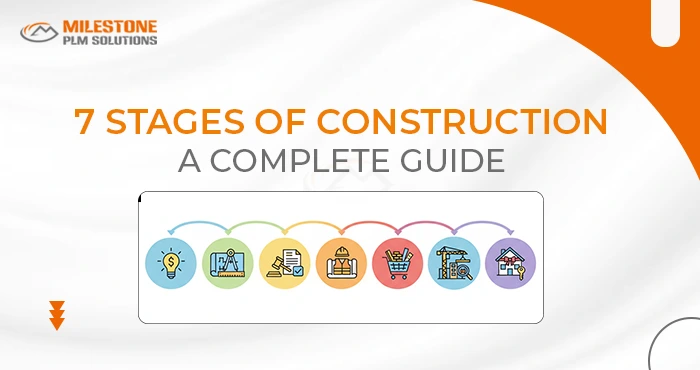
Construction projects are major undertakings that involve a great deal of planning, coordination, and close supervision. Knowing this standard construction sequence and the stages of construction can help everyone manage time and effort, so the job proceeds smoothly from start to finish. This blueprint sets out the 7 critical stages of the construction process, helping you identify key tasks and key challenges on each stage.
Essential Stages of Construction
A well-executed building project moves through several phases of planning. Understanding the stages of construction ensures successful project execution. These stages provide a guarantee of successful, risk Knowing this standard construction sequence can help everyone -free, and high-quality project implementation. From concept to delivery, all phases have their activities, tasks, and challenges which should be managed efficiently to conclude a successful project.
Project Conception / Initiation - Stage 1 of Construction
The beginning of any project is to take an idea and make it into a plan. This phase is about determining the objectives of the project, knowing what needs to be done, and analyzing if a particular project idea is possible within budget, time, and resources available. A strong foundation at this stage sets the tone for the entire project.
Idea Development
- Defining the purpose and vision of the project.
- Establishing the project’s scope and key objectives.
Key Activities
- Conducting initial feasibility studies.
- Assessing project requirements and potential constraints.
Challenges
- Lack of clarity in project goals.
- Underestimating budget and time requirements.
Design & Planning (Pre-Construction Design) - Stage 2 of Construction
Through design and planning, the idea becomes something that can be more concretely put into action in the form of construction documents. In this stage, design concepts are developed into detailed construction drawings; cost estimates and schedules are prepared so that a project is well planned before the start of construction.
Concept & Schematic Design
- Developing initial design concepts.
- Create schematic drawings to visualize the project.
Design Development & Construction Drawings
- Refining designs and preparing detailed construction drawings.
- Estimating costs and scheduling construction timelines.
Key Activities
- Collaboration between architects, engineers, and clients.
- Ensuring compliance with building codes and regulations.
Challenges
- Design revisions can delay the project.
- Misalignment between client expectations and design feasibility.
Bidding / Building Permits / Approvals - Stage 3 of Construction
Once designs are ready, the project requires legal approvals and contractor selection. This stage ensures the project complies with government regulations and that the right construction team is chosen to execute the plan efficiently.
Government Approvals
- Securing building permits from local authorities.
- Ensuring compliance with legal and environmental regulations.
Contractor Selection
- Sending project tenders to potential contractors.
- Evaluating bids and awarding contracts.
Key Activities
- Reviewing contractor qualifications and past projects.
- Confirming permit and approval documentation.
Challenges
- Delays in government approvals.
- Budget overruns due to unexpected permit requirements.
Preconstruction - Stage 4 of Construction
Preconstruction prepares the project for actual on-site work. Teams are assigned, the site is evaluated, budgets are finalized, and potential risks are analyzed. Proper preparation in this stage reduces delays and cost overruns during the stages of construction.
Team Assignment & Site Evaluation
- Forming project management and construction teams.
- Conducting detailed site surveys and soil testing.
Budget Finalization & Risk Analysis
- Confirming the final project budget and timelines.
- Identifying risks and preparing mitigation strategies.
Key Activities
- Preparing project schedules and detailed plans.
- Ensuring resources are available before construction starts.
Challenges
- Inaccurate site evaluations can cause delays.
- Resource shortages may affect project readiness.
Procurement - Stage 5 of Construction
Procurement involves securing all materials, equipment, and labor required for construction. Proper procurement ensures smooth workflow and prevents costly interruptions during the building phase.
Material & Equipment Procurement
- Purchasing construction materials and securing necessary equipment.
- Hiring subcontractors and specialized laborers.
Supply Chain Management
- Scheduling material deliveries in alignment with construction phases.
- Ensuring quality standards for all procured items.
Key Activities
- Vendor negotiation and contract management.
- Inventory management to prevent delays.
Challenges
- Delays in material delivery.
- Rising costs of raw materials impacting budget.
Construction & Monitoring - Stage 6 of Construction
This stage is the actual building process, one of the most critical stages of construction. Construction includes structural work, installations, and finishing, all while monitoring progress, quality, and safety. Effective supervision ensures the project stays on track.
On-Site Execution
- Performing structural work, MEP installations, and finishing works.
- Daily supervision to ensure adherence to quality standards.
Quality Control & Safety
- Conducting inspections at each stage.
- Ensuring worker safety and regulatory compliance.
Key Activities
- Monitoring project progress against the timeline.
- Adjusting plans to address unforeseen challenges.
Challenges
- Weather delays or site hazards.
- Maintaining quality standards under tight schedules.
7. Post-Construction / Closeout – Final Stage of Construction
The final stage ensures the project is completed to satisfaction and handed over to the client. It involves inspections, corrections, cleaning, and providing maintenance guidelines for long-term use.
Final Inspections & Handover
- Conducting final walkthroughs and correcting punch list items.
- Preparing the project for client handover.
Warranty & Maintenance
- Providing maintenance guidelines and warranty documentation.
- Ensuring client satisfaction and resolving any post-construction issues.
Key Activities
- Cleaning and final site preparation.
- Documentation of as-built drawings and operational manuals.
Challenges
- Defects or incomplete works needing correction.
- Coordinating post-handover support efficiently.
Which is the Top AEC Company?
Choosing the right construction and architectural partner can make or break a project. Among the leading AEC (Architecture, Engineering, and Construction) firms, Milestone PLM Solutions stands out for its technical expertise, innovative approach, and commitment to delivering high-quality engineering outcomes. They provide many different services like Architecture 3D Modeling, BIM Modeling, Drafting, and Construction Documentation With strong capabilities in design, planning, project management, and modern construction practices, the company consistently ensures precision, sustainability, and successful project execution.
Frequently Asked Questions (FAQs)
1. How do I know which construction stage requires the most attention?
Every stage is important, but planning, design, and monitoring generally demand the highest precision. These stages determine project cost, timeline, and technical accuracy.
2. How does Milestone PLM Solutions support the design and planning stage?
Milestone provides detailed CAD modeling, engineering design verification, and project planning support to ensure the design is accurate, feasible, and aligned with project goals.
3. Does Milestone PLM Solutions help with project documentation and approvals?
Yes. Milestone assists in preparing technical documentation, drawings, and engineering data that support approval processes and smooth project coordination.
4. Why is monitoring essential during construction?
Monitoring ensures structural accuracy, safety compliance, and timely progress. It helps catch issues early so cost overruns and rework can be avoided.
5. Can a project proceed smoothly without proper preconstruction planning?
No. Strong preconstruction planning—including site evaluation, budgeting, resource allocation, and risk analysis—is crucial to avoid delays and technical issues during actual construction.
Conclusion
It is essential to have a working knowledge of the 7 basic stages of construction, from project conception to post-construction closeout. Certain activities and challenges accompany each stage and with good project planning; projects can be completed effectively and safely. Through these stages and in collaboration with competent AEC firms, clients and project managers can produce successful products, avoid missteps that have become de rigueur, and realize projects likely to survive over time.
Follow Milestone PLM Solutions for Architecture Industry Updates, CAD Tips and Global Architecture News.
Milestone PLM Solutions, with its exclusive delivery center in India, is a global CAD, BIM & Architectural Design services outsourcing partner, serving the needs of the Architecture, Interior, and Construction industry since 2004. MILESTONE focuses on the unique needs of clients and believes in tackling real-life design challenges with efficiency, smoothness, and ease.
The MILESTONE team can assist you with Architectural Design, 3D Modeling, Drafting & Detailing, BIM Modeling, Rendering, and more. We support multiple software including AutoCAD, Revit, ArchiCAD, SketchUp, 3ds Max, and Navisworks. Our approach is to provide a dedicated team for each customer over ongoing projects and consistently deliver high-quality output.
With our state-of-the-art technology and a large talent pool of engineers, we develop best-in-class solutions for clients across the globe. We align with your culture and values to form unbreakable partnerships and are primed for success with over 100 employees and 150 customers in the US, Europe, India, and Asia.
You can email us at info@milestonetech.net and can log in to our website www. milestonetech.net to know more about our services and our work portfolio or contact us on +1 302-565-1600