
Construction Documentation Errors That Lead to Costly Rework
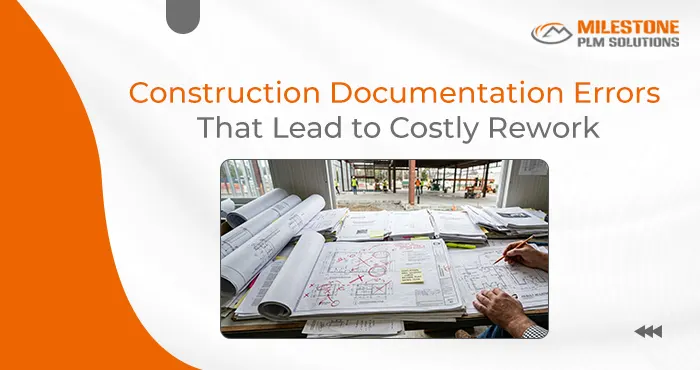
Construction documentation is one of the important factors to ensure the success of building construction projects. It involves the documents required to construct the building, which may include architectural drawings, engineering plans, and coordination details.
Any mistake in the construction documents can lead to serious issues during the construction phase. It can cause confusion among the stakeholders involved in the project, which may lead to fabrication errors, construction issues, and project delays.
Construction documents can be useful in complex construction projects where architects, engineers, and contractors work together. It can ensure the stakeholders involved in the project understand the requirements.
Understanding the errors in construction documents can help the stakeholders to improve the construction process.
Why Construction Documentation Is Critical in Building Projects
Construction documentation expresses design concepts in a manner that is understood by those who carry out construction activities.
The common construction documentation includes:
- Architectural drawings
- Structural drawings
- MEP drawings
- Construction specifications
- Construction material schedules and details
- Shop drawings and fabrication drawings
The construction documentation acts as a guide for:
- The procurement of materials
- The processes of fabrication
- The installation processes
- The coordination of construction activities
In case of inaccurate construction documentation, contractors are likely to assume certain activities, which may result in errors in construction, loss of materials, and increased costs in the project.
Accurate construction documentation helps in ensuring proper execution of construction activities by those who carry out the activities.
Impact of Documentation Errors in Construction Projects
There are significant financial and operational consequences of documentation errors.
Research by the industry shows that design and documentation errors may contribute to 5-10% of overall construction costs due to rework and project delays.
Some of the consequences include:
- delays in project schedules
- errors in fabrication
- conflicts in installation between trades
- wastage of materials
- increased costs of labor
- frequent RFIs (Requests for Information)
- change orders and budget overruns
It is far more efficient to identify and correct documentation errors in the design and coordination phase than in the construction phase.
10 Common Construction Documentation Errors
1. Incomplete Drawings and Specifications
Incomplete project drawings are one of the most common documentation errors in the field of construction.
The lack of information on materials, finishes, dimensions, etc., included in project drawings can create confusion for those who execute the project.
If the documentation does not include adequate information on construction details, different people may interpret project drawings differently, leading to inconsistent installations.
2. Poor Coordination Between Project Disciplines
Construction projects of modern times involve several disciplines such as architecture, structural engineering, and MEP design.
If not coordinated among these disciplines, conflicts are very likely to happen in the design process.
Some of the coordination problems are:
- Conflicts between HVAC ducts and structural beams
- Conflicts between electrical and plumbing conduit lines
- Conflicts between ceiling plans and lighting systems
Early design coordination helps identify these issues before construction begins.
3. Incorrect or Missing Dimensions
Another major cause of errors in construction is dimensional inaccuracies.
Errors caused by inaccurate measurements include:
- Fabrication errors
- Installation errors
- Waste of materials
- Reconstruction
Even small errors in the documents can cause serious errors during the installation.
4. Lack of Compliance With Building Codes
Construction drawings should also comply with local building regulations, safety codes, and engineering standards.
If the documents do not comply with the regulations, the project may encounter the following issues:
- rejections of permits
- design changes
- delays in approvals
Documentation compliance during this stage can help the project avoid any future regulatory issues.
5. Unclear Construction Notes and Details
The drawings may include notes and annotations to provide further information on how to install the constructions.
If these notes are not clear, contractors may not understand the drawings, which may result in incorrect installations.
6. Poor Version Control of Project Documents
Construction projects involve various revisions. Without version control, project teams may work on incorrect drawings. This can result in:
- incorrect fabrications
- incorrect installations
- wastage of materials
- coordination conflicts
Document management ensures that project teams work on the latest drawings.
7. Overlooking Constructability Issues
Design teams may be overly focused on design appearance or performance, with little attention to constructability.
A design can be technically feasible on the drawing board, yet very difficult to construct in the field.
Reviews during the documentation phase can help ensure the design is constructible and efficient to construct.
8. Inconsistencies Between Drawings and Specifications
Construction documents can include both graphical and written information.
It is possible for construction documents to have conflicting information, which may cause difficulties in interpreting correct information for a contractor.
Consistency in construction documents can help avoid confusion during construction activities.
9. Poor Communication Between Project Stakeholders
Construction projects involve cooperation among architects, engineers, contractors, consultants, and clients.
Communication among these members of a construction project is limited if documentation is not adequate.
Frequent coordination meetings and cooperative design reviews may minimize documentation errors.
10. Failure to Update Construction Documents
During construction, design changes are sometimes made due to site conditions or project changes.
If documentation is not updated accordingly, discrepancies may develop between the drawings and actual site conditions.
Having updated documentation ensures that all stakeholders are working from accurate and updated information.
Real Examples of Construction Documentation Errors
In a real construction environment, documentation errors can happen in the following cases:
- Locations of structural beams not indicated on architectural drawings
- Locations of HVAC ductwork conflicting with indicated ceiling heights
- Electrical layout not matching reflected ceiling plans
- MEP services conflicting due to lack of coordination
- Fabrication drawings not matching the architectural drawings in terms of dimensions
These errors can cause delays in installation, design changes, and ultimately cost overruns.
Where Documentation Errors Occur in the Construction Workflow
Documentation issues can occur during different stages of the construction project life cycle.
- Design Phase – In the initial design stages, the design ideas may not be detailed enough to be executed during the construction phase.
- Documentation Phase – Documentation issues can arise during the preparation of the designs, specifications, and schedules.
- Coordination Phase – In the coordination phase, clashes between the architectural, structural, and MEP designs may still be unresolved.
- Fabrication Phase – During the fabrication phase, errors can arise if the shop drawings prepared during the design phase are incorrect.
- Construction Phase – During the construction phase, if the designs prepared during the design phase do not reflect the actual site conditions, conflicts can arise.
How to Identify Construction Documentation Errors Before Construction
Identification of documentation problems at an early stage helps in reducing project risks.
Project teams generally examine documentation by checking the following:
- Verifying the dimension and measurement information on drawings
- Cross-verifying coordination of architectural, structural, and MEP systems
- Conducting constructability checks
- Conducting multidisciplinary design coordination meetings
- Conducting clash detection through BIM-based tools
These activities help in identifying problems before the actual construction work is undertaken.
Quality Control Checklist for Construction Documentation
Having a quality control process in place can also help to reduce errors in the documentation prior to the start of the construction.
A typical checklist for the review of the documentation may include the following:
- Checking the dimensions and measurements
- Checking the coordination between the disciplines involved in the project
- Checking the compliance with building codes
- Checking the construction notes and specifications
- Checking the installation details
- Checking the versions of the documents
Having a quality control process in place can ensure the accuracy of the documents.
Role of BIM in Reducing Construction Documentation Errors
Building Information Modeling (BIM) has greatly improved the creation and coordination of construction documents.
With BIM, project teams can design intelligent 3D models that bring together architectural, structural, and MEP elements in a single environment.
The main advantages of BIM include:
- Improved coordination between architectural, structural, and MEP elements.
- Early detection of design conflicts.
- More accurate construction documents.
- Fewer errors in fabrication and construction.
With BIM, project teams can identify potential conflicts in advance, which can help avoid costly rework.
How Professional Drafting and BIM Services Help Prevent Documentation Errors
In many cases, incomplete technical details and lack of coordination among project disciplines contribute to many documentation-related problems.
Engineering support groups like Milestone PLM Solutions can reduce the risks associated with project documentation by offering drafting and BIM coordination services.
These services include:
- CAD Drafting Services
- Construction Documentation Preparation
- MEP BIM Modeling
- MEP Shop Drawings
- BIM Clash Detection and Coordination
- Mechanical CAD Drawings
- Electrical Drawings
- As-Built Drafting Services
With well-coordinated project documents, it is possible to efficiently execute the project without any conflicts.
Free Construction Documentation Review
If your construction project is experiencing coordination conflicts, drawing inconsistencies, or RFIs during construction, it could be a sign of documentation problems. The engineering experts at Milestone PLM Solutions can help you identify potential problems before they impact construction progress. Our Free Construction Documentation Review can help you:
During the review, our experts check for:
- drawing coordination between disciplines
- potential MEP clashes
- documentation completeness
- constructability issues
- potential fabrication conflicts
By performing this review at the early stage of your construction project, you can save your team from costly rework during construction.

Prevent Documentation Errors Before Construction Begins
Construction documentation issues often trigger RFIs, fabrication modifications, and construction conflicts, which can impact project timelines and costs.
Accurate construction drawings, coordination of construction documents, and construction document review processes can help reduce the risk of construction document issues.
Time invested in construction document preparation can greatly benefit project efficiency and reduce construction rework.
Conclusion
Construction documentation errors have remained one of the leading factors affecting delays, coordination issues, and costly reworks in the construction industry.
Construction drawings, coordination, dimensioning, and documentation issues have a huge impact on project timelines and budgets.
The application of effective documentation review processes, collaboration between project stakeholders, and technology such as BIM can help reduce errors in project documentation.
Effective and accurate construction documentation will result in a smooth flow of processes, coordination, and successful project outcomes.
Frequently Asked Questions
What are construction documentation errors?
Construction documentation errors refer to errors or inconsistencies in architecture, engineering, or coordination documents, which may result in conflicts, delays, or increased cost in a construction project.
Why are accurate construction documents important?
Accurate information in construction documents is important since it ensures that contractors and project teams understand design intent, installation requirements, and technical information necessary for successful project execution.
How can BIM help reduce documentation errors?
BIM can help to reduce errors in construction documentation since it enables coordination of architecture, structure, and MEP systems, thus identifying errors before a project is constructed.
What is the most common cause of documentation errors?
Poor coordination of project disciplines and incomplete construction drawings are some of the most common causes of errors in construction documentation.